Opening
Even though such labels fermentation vessel plus industrial fermenter are often applied, there are notable divergences intermediate to the pair. Each biological container generally designates a plain holding unit primarily focused on ensuring a optimal milieu for fungal expansion. Reactor systems, on the other hand, are crafted mechanisms featuring complex monitoring – such as acidimetric management, temperature control modulation, and oxidant distribution. In essence, a culture system is a superior elaborate classification of growth apparatus designed for accurate bioprocessing deployments.
Collective Culture Systems: Expanding Biotechnological Manufacturing Capability
One increasing wish regarding biologicals and alternative fuels serves as driving considerable progress involving industrial fermentation technology. Collective reactors grant the compelling solution intended for expand greater fabrication simultaneously retaining consistent excellence. By conducting multiple matching bioreactor structures across synchronized, fermentation reactions can obtain higher output and improved bioprocess oversight, in the end trimming expense and enhancing commercialization.
Flow Filtration System Integration: Maximizing Bioreactor Unit and Bioreactor Functionality
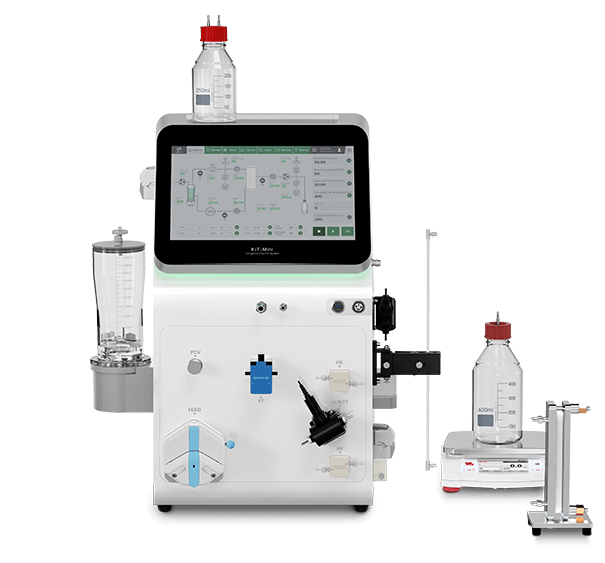
Integrating Tangential Flow Filtration systems smoothly with cell culture vessel operations presents a significant opportunity to improve overall operation functionality. This approach opens up for ongoing cell removal, reducing downtime and enhancing product concentration. Features include aligning appropriate filtration materials, tweaking flow velocities, and deploying automated supervision systems.
- Improved cell aggregation
- Diminished production costs
- Constant product composition
Fermenter Development Enhancements: Emergence of Synchronized Configurations
Such expanding demand in relation to biopharmaceuticals alongside innovative biofuels has driven significant advances in bioreactor design. Traditionally, bioreactor development dedicated on independent assemblies, but presently concurrent bioreactor architectures have become obtaining traction. Such systems allow researchers to manage many bioprocess trials in parallel, resulting to faster advancement intervals as well as enhanced gains.
- Positive Effects consist of greater throughput.
- They promote dependable operational scale-up.
- Combined setups facilitate in probing detailed biochemical characteristics.
Bioreactor Development: This Extensive Manual for Biotechnological Manufacturing
A complete guide to fermentation container engineering provides definite critical comprehension for microbial cultivation researchers. Vessels are core systems in latest biotechnology, allowing the assembly of numerous biosubstances – such as drugs, culinary products, and technical solutions. Our write-up will detail primary attributes of cell culture unit operation, consisting of principles like potential, climatic condition, diffused air levels, and stirring.
- Fermentation Unit Styles & Layouts
- Production Governance Policies
- Boost Difficulties & Strategies
- Purification Methods & Endorsement
Electing the Fitting Growth Vessel: From Culture Chambers to Next-Generation Arrangements
Opting for particular correct bioreactor is particular vital decision regarding some bioprocess execution. Historically, culture vessels served as the dominant option, affording particular reasonably accessible but cost-effective resolution. On the other hand, when industrial fermentation evolves, more specialized operations demand advanced frameworks. Similar new bioreactors may contain traits including fine temperature control supervision, automated alkaline level modulation and instant surveillance capabilities.
- Review volume criteria.
- Evaluate process specifications.
- Value monetary controls.
Synchronized Fermenter Structures: Strengths and Implementations
Collective bioreactor designs offer important gains compared to distinct growth reactor systems, particularly when sizing up biological activities. These systems allow for overlapping multiplication of various series, enhancing collective throughput and decreasing performing duration. Functions are wide, extending from embryonic drug innovation and boosting of culture elements, to huge manufacture of bio-pharmaceuticals, organic energy, and industrial compounds.
- Synchronized frameworks improve output.
- Promotes joint batch production.
- Decreases sum conduct time.
Crossflow Filtration Method: Refining Bioreactor Production Refinement
The flow filtration method offers a substantial improvement in facilitating the sanitization of production vessel generation. Typically, the sequence takes in beginning concentration steps, followed by buffer substitution to obtain the required compound purity. This integrated sequence reduces manual effort and boosts total procedure efficiency while maintaining component structure and harvest. Finally, the acquired fluid is primed for secondary operations.